

1 Characteristics of chilled meat
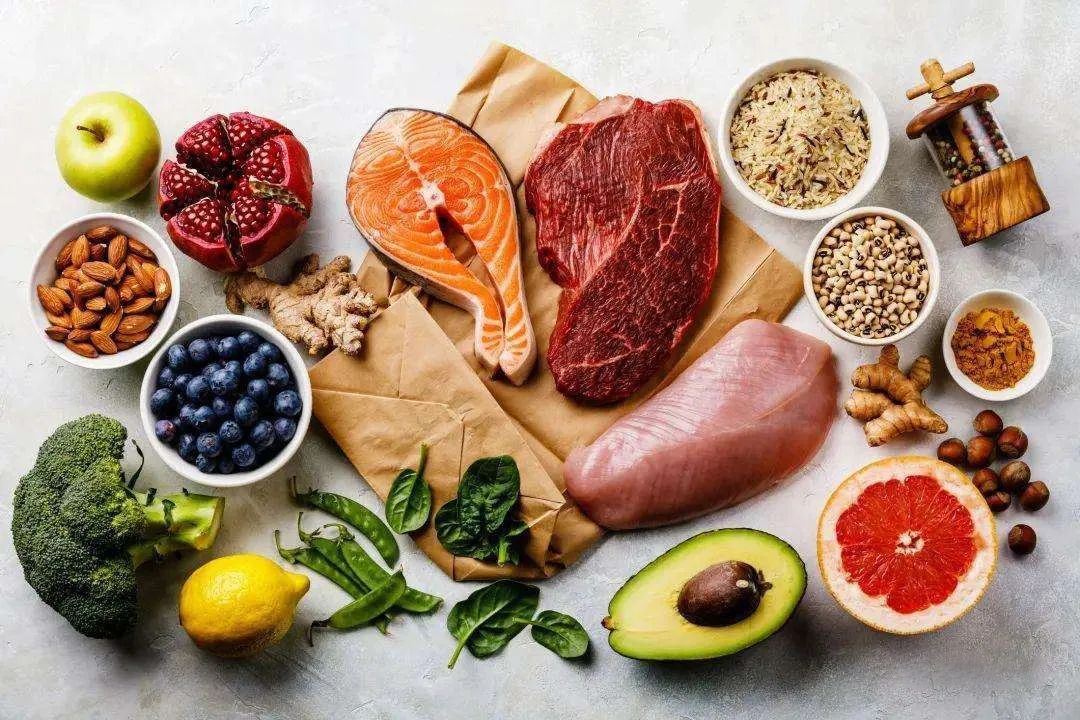
Chilled meat refers to the rapid cooling of the carcass after the slaughter of livestock and poultry, so that the carcass temperature is reduced to 0-4°C within 24 hours, and it is always kept fresh within this temperature range during subsequent processing, circulation and sales. Meat. Compared with hot fresh meat, cold fresh meat is always in a cooling environment, and the growth and reproduction of most microorganisms are inhibited, which can ensure the hygiene and safety of the meat; compared with frozen meat, cold fresh meat has less loss of juice, softness and elasticity. It has the advantages of delicious taste and high nutritional value. However, cold fresh meat is sold in a freezer at 0 to 4 °C, and the shelf life of this refrigerated packaged meat is only 3-4 days, and the hygiene quality and safety of fresh meat remain. exist.
2 Advanced chilled meat preservation packaging technology
2.1 Vacuum shrink packaging
Vacuum shrink packaging has been widely used in developed countries, of which the United States is the world's largest shrink bag consumer market; Australia, New Zealand and Europe also have large markets, and Asia is relatively small in terms of consumer market. The overall shrink bag market size is between 10-15 billion bags or $1.5-2 billion.
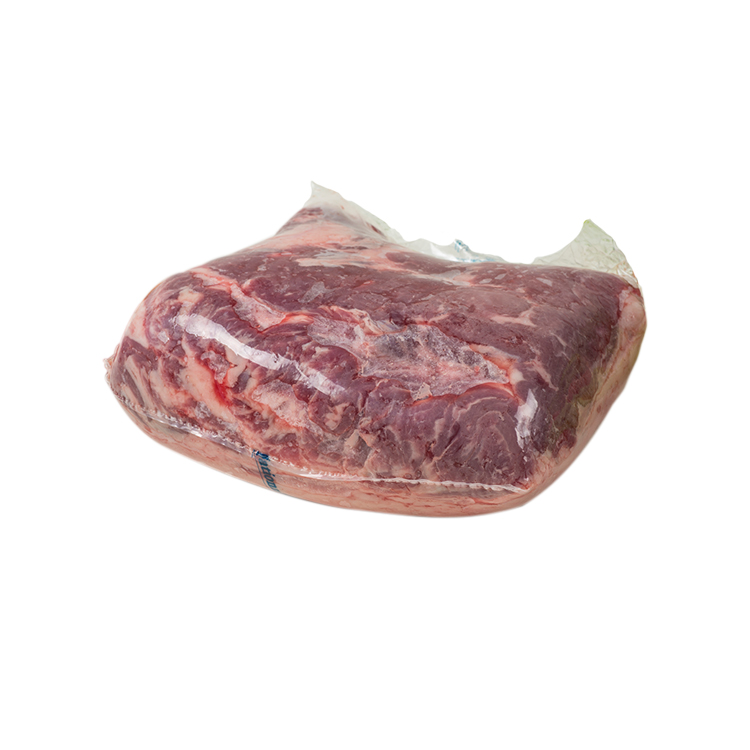
When the vacuum shrink bag is used for the packaging of cold fresh meat, the contents are vacuum sealed and put into the hot water or hot aisle, and the plastic bag shrinks into the original shape of the meat block and becomes the "second skin" of the meat. Shrinkage reduces excess material on the outside of the package, making the package tighter, more aesthetically pleasing, and more attractive for meat sales; shrinkage eliminates bag film wrinkles and the resulting capillary water absorption, thereby minimizing blood and water from the meat. ooze. Based on the shrinkage effect, the thickness of the barrier plastic bag film is thus increased, enhancing its abrasion resistance and barrier properties. Through vacuum shrink packaging, the shelf life of chilled meat can be as long as one month after slaughter. The shrink film is prepared by the double-bubble co-extrusion method. The raw resin is melted and extruded through the extruder to extrude the first film bubble. Traction; the dried and flattened material tape is irradiated through the EB device and then enters the preheating water tank for heating, and is formed into a second film bubble by secondary inflation, and finally pulled and rolled to form a film. The product shrinkage rate is about 35-45%, and the thickness range is 50-90 μm. The heat shrinkable bag made of film is generally tubular. The seal of the shrinkable bag is different from the linear seal of the vacuum bag. No leftovers are left.
2.2 Thermoforming packaging
The main processes used for thermoforming packaging materials are casting processing and extrusion water cooling processing. The casting processing technology is relatively mature, but the cooling efficiency is low, the appearance is striped, and the yield is low; while the extrusion water cooling processing technology has tensile strength. The advantages of high production efficiency, soft, transparent, and easy-to-form films are high-tech technologies that have developed rapidly in recent years, and will also be the mainstream technology for future production development.
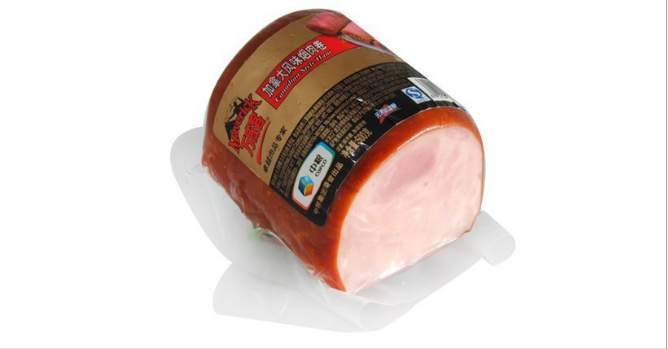
Thermoforming packaging has the following advantages: excellent forming performance, high transparency, safe and hygienic in circulation, high degree of automation, and production capacity is dozens of times higher than manual packaging.
2.3 Vacuum skin packaging
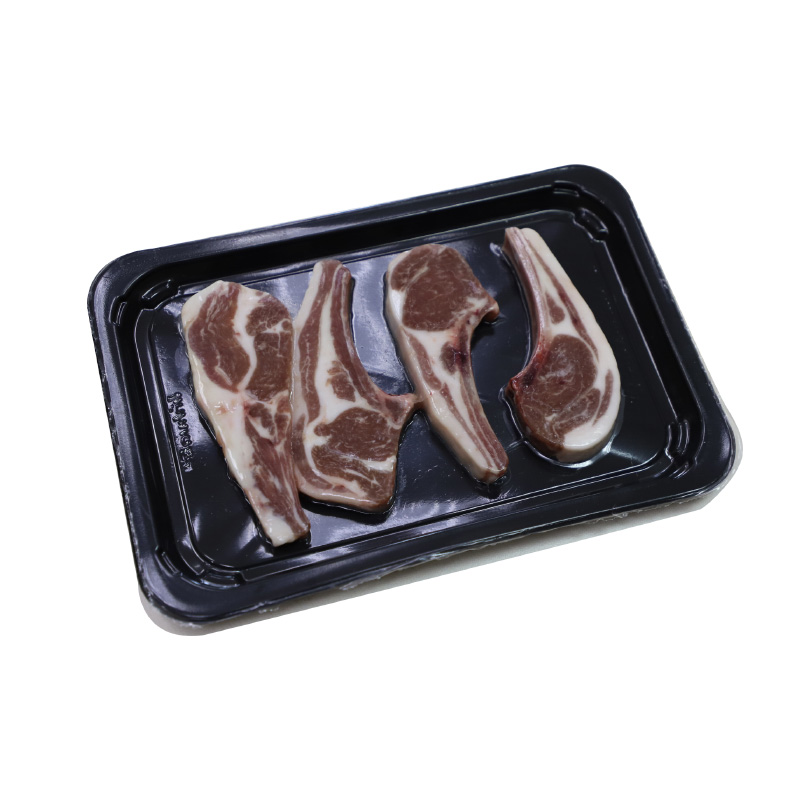
Vacuum skin packaging is a novel commodity packaging technology, widely used in the international food packaging industry, mainly used for the packaging of fresh meat, fish, aquatic products, cooked meat products, cured products, sliced sausages and sushi. The body-packed food not only has good display, but also has a long shelf life and is convenient to eat. Vacuum skin packaging is mainly composed of a substrate tray and a plastic cover film. The process of skin packaging is as follows: the packaged product is placed in the tray, and the special skin-fitting plastic cover film covering the product is closely attached to the surface of the product under the action of heating and vacuuming, and is sealed with the substrate tray. The substrate tray of vacuum skin packaging is required to have good tensile properties, good barrier properties, high strength, and strong pressure resistance. The layer is Surlyn and EVA resin with good thermal adhesion and good elasticity. Different from stretch forming packaging, vacuum body packaging does not require any molds. For products of different sizes and shapes, the effect of sticking to food and sealing packaging can be achieved through a special transparent body cover film, which is convenient, economical and efficient. .
2.4 Modified atmosphere fresh-keeping packaging
Modified atmosphere preservation is to use packaging materials with gas barrier properties to package food. According to the actual needs of customers, a certain proportion of O2+CO2+N2, N2+CO2, O2+CO2 mixed gas is filled into the package, thereby inhibiting the growth of microorganisms and The purpose of reproduction and prolonging the fresh-keeping period, thereby prolonging the shelf life of food and enhancing the value of food. CO2 mainly inhibits the growth of bacteria and fungi, especially in the early stage of bacterial reproduction, the best bacteriostatic effect is at low temperature and 20% to 30% concentration; N2 mainly prevents oxidative rancidity and inhibits the growth of mold; O2 mainly oxygenates myosin Protein, keep meat bright red color, and inhibit the reproduction of anaerobic bacteria.
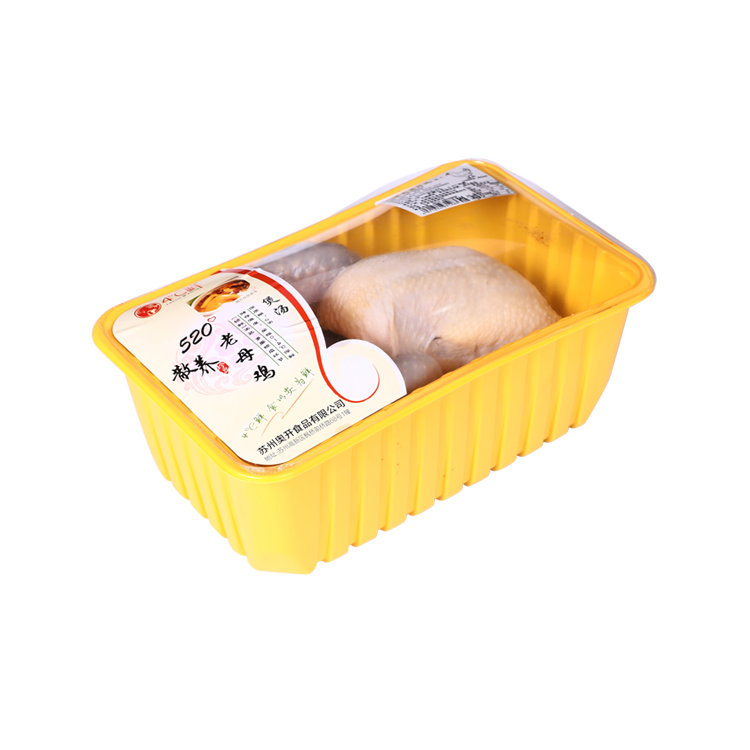
Whether the original atmosphere can be maintained for a certain period of time after modified atmosphere packaging of cold fresh meat depends to a large extent on the choice of packaging materials used, so the selection of packaging materials is also a key link. The following is the selection of packaging materials. Problems that should be paid attention to: 1) According to the fresh-keeping requirements of chilled meat, it is required to use films and packaging boxes with low air permeability or high barrier properties. Thereby reducing the replacement of the gas in the package with the gas in the atmosphere through the film; 2) The cover film should have anti-fog and high light transmittance. affect sales.


