

Fresh meat and its changes during storage
Meat is one of the important nutrients for human beings, but it is also a good place for the growth and reproduction of microorganisms. During storage and transportation, meat will gradually deteriorate and spoil due to the effects of the environment, microorganisms and enzymes during storage and transportation.
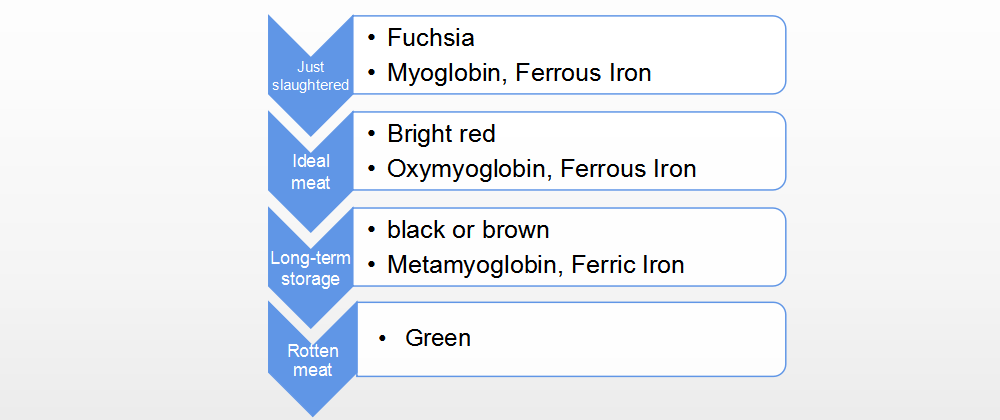
Fresh meat obtained just after slaughtering is purple-red because the myoglobin and secondary iron in fresh meat have not been oxidized. But such a state is not long-lasting, due to the ubiquitous O2 in the atmosphere. Of course, the PVDC Shrink Film, EVOH Shrink Film and the PVDC Shrink Bag and EVOH Shrink Bag produced by the Tipack team made use of these Shrink Films to extend and maintain The ideal state of fresh meat has a very positive effect.
Ideally, meat should be bright red, when myoglobin combines with oxygen to form oxymyoglobin, and the secondary iron has not been oxidized, such meat is the healthiest. After all, only secondary iron can be absorbed by the body and support human health.
After long-term storage, some meat will appear black or brown, this is because the myoglobin in the meat becomes metamyoglobin, and the secondary iron is also oxidized to ferric iron. Such meat has no nutritional value, looks bad, and is not good for eating.
If the wrong storage method or environment is used, please do not eat the meat when you find that the meat is green, because such objects have deteriorated. The smell is very bad, and the appearance is also very ugly. The most important thing is that eating such a real thing will damage the body and even poison it.
The PVDC Shrink Film, EVOH Shrink Film, PVDC Shrink Bag, EVOH Shrink Bag released by the Tipack team is a physical preservation technology, not cell killing. They use the properties of shrink wrap to strengthen the vacuum inside the package, inhibit cell respiration, and greatly slow down the cell's metabolism. As a barrier layer, PVDC or EVOH can effectively prevent the exchange of oxygen inside and outside, and place meat vitamins, red blood cells and iron ions to be oxidized.
Storage of meat
The storage of meat should be through the modified environment so that cellular respiration is inhibited, not stifled, and activity and metabolism can be restored after the meat leaves the modified environment. The current effective methods for extending the storage time of meat are microbial control, temperature control and packaging methods. Low temperature can inhibit the function of microorganisms and enzymes. After slaughtering, fresh meat should be kept in a low temperature environment. Of course, packaging with PB type Shrink Film or Shrink Bag before putting it into a low temperature environment will prolong the storage period by 3-5 times.
Packaging method
Excellent meat packaging should have good strength to reduce damage during storage and transport, outstanding barrier properties to ensure a long shelf life of meat, and should also have excellent light properties and processing adaptability. Not only does it prevent product spoilage or contamination, it also contributes to extending the commercial life of meat.Feedback shows that the Shrink Film, Shrink Bag, MAP Trays, and VSP Trays recommended by Tipack are very effective for the safe storage of fresh meat. Using these products can even extend the shelf life of the original 3-5 days by 45 days, and the meat color is bright.


